Why Choose an AC Gear Motor for Global Applications?
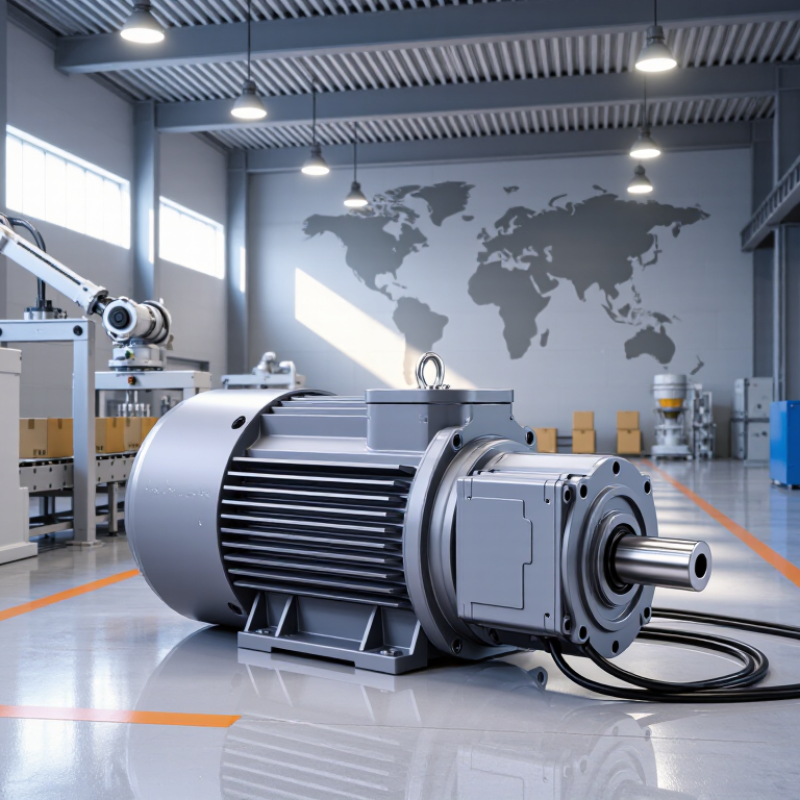
Choosing a drive system for global equipment involves more than checking torque and speed. Engineers must consider voltage variation, duty cycles, ambient temperature, noise, service access, and local installation practices. An AC Gear Motor can provide steady rotary motion while reducing speed and increasing usable torque. That combination suits conveyors, packaging lines, mixers, pumps, and automated warehouse equipment.
Nikola Tesla, an AC motor pioneer, wrote, “The present century will be the century of electricity.” His observation still reflects modern industry, where reliable electrical motion supports production across continents. Today, AC gear motors remain practical because they work with widely available power systems and standard industrial controls. When paired with an inverter, they can offer adjustable speed and smoother starting. A sealed enclosure can also protect internal parts from dust, moisture, and washdown conditions.
Real-world selection requires careful details. A motor running beside a hot furnace needs different protection from one installed in a cool warehouse. A conveyor carrying uneven cartons may need higher starting torque. These small differences matter.
However, AC gear motors are not perfect. They may create more noise than some servo systems. Their efficiency can also decline when sizing is poor. I have seen projects focus on purchase price and overlook maintenance space. That mistake becomes expensive later.
This article examines why an AC Gear Motor remains a dependable choice for global applications. It considers efficiency, adaptability, maintenance, safety, and long-term operating value. The best solution is rarely the cheapest unit. It is the one that keeps moving when conditions become less predictable.
AC Gear Motor Basics: 50/60 Hz Power and Speed Reduction Principles
Why Choose an AC Gear Motor for Global Applications?
An AC gear motor combines a standard induction motor with mechanical speed reduction. Its operating principle is practical and widely understood. A four-pole motor reaches about 1,500 rpm at 50 Hz and 1,800 rpm at 60 Hz before slip. Actual speed is slightly lower under load. That difference matters when conveyors, mixers, or packaging machines cross national power systems.
Frequency determines motor speed. The gearbox then converts high speed into usable torque. With a 30:1 reduction ratio, a 50 Hz motor may deliver roughly 50 rpm at the output. At 60 Hz, the result approaches 60 rpm. Load, gearbox efficiency, and slip will change those figures. Small errors can become costly. I have seen a simple frequency assumption create unexpected conveyor throughput.
The International Energy Agency’s Energy Efficiency Market Report 2017 estimated that motor-driven systems consumed about 53% of global electricity. This figure explains why correct motor selection deserves engineering attention. IEC 60034-1 provides internationally recognized requirements for rotating electrical machines, including rated frequency and operating conditions. Engineers should verify voltage, frequency, duty cycle, starting torque, and thermal limits before specifying an AC gear motor. A 50 Hz design may run faster on 60 Hz power, but torque and cooling behavior may also change. Local testing remains essential.
Global Voltage Compatibility: 100–480 V AC Systems and Frequency Matching
Why Choose an AC Gear Motor for Global Applications?
Global equipment rarely operates under one electrical standard. IEC 60038 identifies nominal low-voltage systems ranging from 100 to 480 V AC. An AC gear motor designed for this span can simplify machinery deployment across factories, warehouses, and processing sites. However, voltage compatibility must be confirmed at the motor terminals, not only on the nameplate.
Frequency matching matters just as much. Most industrial networks use 50 or 60 Hz, while some regions use both. According to the International Energy Agency, electric motor systems consume roughly half of global electricity. Even small frequency errors can affect motor speed, torque, heat, and gearbox loading. A 60 Hz motor connected to a 50 Hz supply may run slower and draw different current. That difference is easy to overlook.
Commissioning teams should check voltage, frequency, phase, starting current, insulation class, and protection settings together. IEC 60034-1 provides a useful reference for rotating-machine ratings and operating conditions. In practice, a 100–480 V AC design can reduce redesign work, but it does not remove engineering responsibility. Cables, overload relays, and frequency converters still need local verification. Field conditions are often less tidy than specifications suggest. A careful test under real load remains essential.
Efficiency Standards: IEC 60034-30-1 and IE2–IE4 Motor Classes
Why Choose an AC Gear Motor for Global Applications?
An AC gear motor combines a dependable motor with controlled mechanical speed reduction. For global projects, its efficiency class matters. IEC 60034-30-1 defines IE2, IE3, and IE4 efficiency levels for many line-operated AC motors. IE2 is high efficiency, IE3 is premium efficiency, and IE4 is super premium efficiency. These labels support clearer comparisons across suppliers and markets.
The International Energy Agency estimates that electric motor systems consume about 46% of global electricity. That figure explains why small efficiency gains can create substantial operating savings.
An IE3 or IE4 motor may reduce losses during long production cycles, especially in conveyors, pumps, mixers, and material-handling equipment. However, IEC classification usually describes the motor, not the entire gear-motor system. Gearbox losses, inverter operation, lubrication, and load variation still affect real performance. Check the complete assembly.
This is where engineering experience becomes important. A factory may select IE4, then operate it far below its rated load. The expected savings can shrink. Sometimes, dramatically. I have seen sizing decisions focus on nameplate efficiency while ignoring frequent starts, ambient heat, and maintenance access. That approach needs reconsideration.
The European Commission’s ecodesign assessments also emphasize system-level energy performance, not motor efficiency alone. For international applications, verify the IEC test method, rated frequency, voltage, duty cycle, and local efficiency requirements before procurement. A reliable comparison uses measured operating data, not only catalogue percentages.
International Protection: IP55–IP66 Ratings for Harsh Operating Environments
Why Choose an AC Gear Motor for Global Applications?
An AC gear motor can provide steady torque in factories, conveyors, pumps, and outdoor equipment. Its enclosure rating matters when dust, moisture, and cleaning water are unavoidable. IP55 protects against limited dust entry and water jets from any direction. IP66 offers dust-tight protection and resistance to powerful water jets. These ratings support dependable operation in demanding environments. They do not make every motor waterproof.
In field installations, I have seen motors fail because installers ignored cable glands and shaft seals. A strong enclosure cannot compensate for an open cable entry. The mounting position also affects drainage, condensation, and long-term reliability. Coastal air, washdown areas, and dusty workshops create different risks. IP66 may suit frequent cleaning, while IP55 can fit sheltered industrial spaces. The right choice depends on real exposure, not a higher number alone.
Check the motor’s voltage, frequency, insulation class, and duty cycle before installation. Global applications often face different power systems and ambient temperatures. Use qualified technicians to verify compatibility and protective devices. Regular inspection helps reveal corrosion, loose glands, unusual noise, or overheating. I have learned that small maintenance gaps become expensive failures. That lesson is easy to miss. An IP rating describes tested protection, but site conditions can still exceed the test environment.
Why Choose an AC Gear Motor for Global Applications? - International Protection: IP55–IP66 Ratings for Harsh Operating Environments
| IP Rating |
Solid-Particle Protection |
Water Protection |
IEC 60529 Test Description |
Suitable Operating Environments |
Important Selection Considerations |
| IP55 |
Protected against dust in quantities that could interfere with operation; not dust-tight. |
Protected against water jets from any direction. |
Water projected through a 6.3 mm nozzle at approximately 12.5 L/min for at least 3 minutes. |
Indoor machinery, covered outdoor equipment, conveyors, packaging lines, and moderately dusty production areas. |
Use where occasional hose-down exposure is expected, but continuous dust ingress or powerful washdown is not a primary risk. |
| IP56 |
Protected against dust in quantities that could interfere with operation; not dust-tight. |
Protected against powerful water jets from any direction. |
Water projected through a 12.5 mm nozzle at approximately 100 L/min for at least 3 minutes. |
Outdoor conveyors, agricultural machinery, loading areas, and equipment exposed to heavy rain or strong washdown. |
Provides stronger water-jet resistance than IP55, but it does not provide complete protection against dust ingress. |
| IP65 |
Dust-tight; no dust ingress is permitted. |
Protected against water jets from any direction. |
Dust-tightness is evaluated using a dust chamber; water-jet testing uses a 6.3 mm nozzle at approximately 12.5 L/min for at least 3 minutes. |
Dusty factories, cement handling, woodworking, textile production, outdoor automation, and general industrial applications. |
A practical choice when preventing dust ingress is more important than resistance to powerful washdown or temporary immersion. |
| IP66 |
Dust-tight; no dust ingress is permitted. |
Protected against powerful water jets from any direction. |
Dust-tightness is evaluated using a dust chamber; powerful water-jet testing uses a 12.5 mm nozzle at approximately 100 L/min for at least 3 minutes. |
Food and beverage processing areas, marine-adjacent installations, outdoor plants, heavy washdown zones, and dusty industrial sites. |
Offers the highest protection in this range against both dust and powerful water jets, subject to correct cable glands, connectors, seals, and installation practices. |
Selection note: IP ratings are based on enclosure protection under defined test conditions. They do not by themselves confirm resistance to chemicals, salt spray, corrosion, high temperature, explosive atmospheres, or temporary immersion. For a complete AC gear motor installation, also verify ambient temperature, duty cycle, voltage and frequency, mounting position, lubrication requirements, shaft sealing, cable entry protection, and local electrical regulations.
Application Sizing: Torque, Speed, S1 Duty, and Service-Factor Requirements
An AC gear motor suits global equipment because it combines steady induction-motor operation with compact speed reduction.
However, application sizing matters more than catalog power. The U.S. Department of Energy’s Motor Systems Market Assessment reports that motor-driven equipment uses about 69% of industrial electricity in the United States. Small sizing errors can therefore increase energy use and maintenance costs.
Start with load torque, not motor horsepower. Calculate acceleration torque, friction, gravity, and any shock loads. Then match the required output speed and gearbox ratio. For continuous operation, specify S1 duty under IEC 60034-1. S1 means continuous running at a constant load until thermal equilibrium. Check ambient temperature, installation height, enclosure, and cooling airflow. A 1.5 kW motor may deliver enough running torque, yet fail during repeated starts. That detail is often missed.
Tips:
Record real operating data for one production cycle. Measure shaft speed, current, and peak load when possible. Apply the manufacturer’s service factor only after checking duty cycles and shock levels. Service factor is not free capacity. It can hide poor sizing. For global projects, verify voltage and frequency compatibility, along with local efficiency requirements. IEC 60034-30-1 classifies motor efficiency levels, but efficiency labels do not replace application testing. I would also leave practical margin, though excessive margin can reduce efficiency and control quality. Recheck the calculation before purchase.
Conclusion
An AC Gear Motor is a practical solution for global machinery because it combines reliable AC power operation with controlled speed reduction and increased output torque. Designed for 50 or 60 Hz systems, it can support a wide range of operating conditions when voltage, frequency, and motor specifications are correctly matched. Compatibility with 100–480 V AC networks makes it suitable for many international installations, while selecting the proper frequency helps maintain stable performance and service life.
For demanding environments, efficiency classes from IE2 to IE4 can help reduce energy consumption and operating costs in line with IEC 60034-30-1 principles. IP55 to IP66 protection levels provide increasing resistance to dust and moisture, supporting use in harsh industrial locations. Proper sizing remains essential: engineers should evaluate required torque, output speed, continuous S1 duty, and service-factor requirements to ensure dependable operation, avoid overload, and achieve long-term system efficiency.
 Rovix Motion
